In a coastal town in California, physicians are prescribing boxes of produce instead of pills. Communities in Palm Desert are reducing food waste by implementing programs for edible food generators to give surplus food to food recovery organizations. Thousands of miles away on a rooftop in Singapore, neighbors gather around tomato vines as the sun rises over one of the world’s densest cities. These are seeds of emerging Blue Zones—living laboratories of the Power of the Plate (POP). The POP framework envisions a world where food acts as medicine for both people and the planet. The “Healing Communities and Planet” layer of POP emphasizes that when food is grown regeneratively, shared equitably, and consumed mindfully, it fosters a self-reinforcing cycle of human, social, and environmental well-being.
A blue zone is a geographic region where people live significantly longer and healthier lives than average, often reaching age 100 at much higher rates. The concept originated from demographic research by Dan Buettner and colleagues, who identified regions with exceptional longevity and low rates of chronic disease. A region is classified as a blue zone when it demonstrates:
-High life expectancy and centenarian rates compared to global averages.
-Low prevalence of lifestyle-related chronic diseases such as heart disease, diabetes, and obesity.
-Cultural and lifestyle patterns that support health and longevity, including strong social networks, plant-based diets, natural physical activity, and a sense of purpose.
The five original blue zones are Okinawa, Japan, Sardinia, Italy, Nicoya Peninsula, Costa Rica, Ikaria, Greece, and Loma Linda, California, which is home to a large population of Seventh-day Adventists. These regions are well-known and well-studied; therefore this article will focus on emerging blue zones instead, which share some similar characteristics. Monterey County, California, Palm Desert/Coachella Valley, California, and Singapore are all emerging and potential blue zones and will be discussed further.
Monterey County, California: Farm-to-Hospital & Produce Prescription Programs
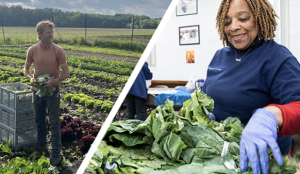
In Monterey County, California, hospitals and local farms are reframing healthcare delivery through food-as-medicine programs. The Natividad Medical Center’s Farm-to-Hospital and Food Farmacy initiatives integrate fresh, locally grown produce into clinical care and community outreach. These programs allow physicians to prescribe weekly boxes of organic fruits and vegetables to patients with diet-related conditions. Hospital gardens grow much of the produce served in patient meals, and educational sessions teach families to prepare nutrient-dense meals. These initiatives improve diet quality, reduce food insecurity, and improve health outcomes among participants. When Maria, a patient in Monterey County, received her first produce prescription through a local Food-as-Medicine initiative, she thought it was just a one-time benefit. “I didn’t realize food could be medicine,” she shared. “Now I cook with my grandkids, and my doctor says my blood pressure is finally stable.” Monterey County, California embodies the POP principle of integration as it bridges medical care and agriculture to transform food from a treatment expense into a healing resource.
Impacts on Human, Community, and Planetary Health
By connecting local farms, healthcare systems, and families, the program creates an integrated model that strengthens human, community, and planetary health. It empowers individuals to prevent and manage chronic disease through access to fresh, nutrient-dense foods, while supporting local farmers and food producers who form the backbone of resilient communities. At the same time, sourcing food locally reduces the environmental impact of long-distance transport, cutting carbon emissions and promoting more sustainable, regionally based food systems. Together, these efforts demonstrate how health, community, and environmental wellbeing can thrive through the shared act of growing and eating real food.
Palm Desert/Coachella Valley, California: From Food Access to Food-as-Medicine
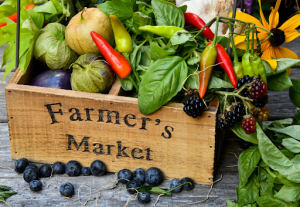
Palm Desert and the surrounding Coachella Valley aren’t yet classic blue zones, but there are several promising initiatives and programs addressing food insecurity, gardeners, waste recovery, and healthy food access. These create a foundation that could be scaled toward food-as-medicine and emerging blue zone status. The blue zones project arm in the Palm Springs area has pop-up farmers’ markets and produce accessibility components. The Palm Desert Campus Food Pantry provides fresh produce and other essentials to students experiencing food insecurity. Jordan, a college student juggling classes and part-time work, began visiting the College of the Desert Basic Needs Center for free local produce. “I used to grab fast food between classes,” he explained. “Now I prep veggies with friends — it saves money, and I feel better than I have in years.” Programs like these not only improve access to nutritious food but also reflect the emerging Blue Zone movement in the Coachella Valley, where partnerships between healthcare providers, schools, and community groups foster holistic health and sustainability. The Palm Desert Edible Food Recovery Program requires grocery stores, restaurants, and other edible food generators to divert surplus food to food recovery organizations like food banks to reduce food waste and improve food access to communities with limited grocery access. The Palm Desert region shows alignment with POP as it has a strong commitment to well-being initiatives via the Blue Zones Project, has programs that recover edible food and recovering waste, and it shows infrastructure for food security.
Impacts on Human, Community, and Planetary Health
Improved food security for students and low-income residents has been achieved through increased access to fresh fruits and vegetables provided by mobile pantries and edible food recovery programs. These initiatives not only nourish individuals but also strengthen community ties, as students and vulnerable populations gain reliable access to nutritious foods while local businesses and nonprofits collaborate to reduce waste and promote equity. At the same time, edible food recovery efforts divert significant amounts of food from landfills, decreasing methane emissions and promoting environmental sustainability. By supporting pop-up farmers’ markets and emphasizing locally grown produce, these programs shorten supply chains, foster community awareness of food waste, and create a more resilient, circular food system that benefits people, communities, and the planet alike.
Singapore: Community in Bloom & Food as Medicine Innovation
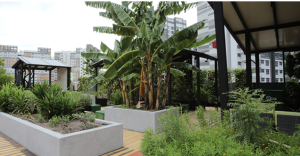
Singapore demonstrates how densely populated, urban societies can embrace blue zone principles through policies that integrate public health, sustainability, and community building. The Community in Bloom initiative has established more than 1,600 community gardens across public housing estates, schools, and rooftops. Complementary programs under the Singapore Green Plan 2030 expand edible gardens and allotment plots as part of the nation’s city in Nature strategy. The Wilmar-NUS Food Science Lab develops plant-based, heart healthy foods tailored to Asian dietary needs, supporting a food-as-medicine approach to chronic disease prevention. Lina, a retiree living in a high-rise apartment, joined her neighborhood’s Community in Bloom garden. Within months, she was tending herbs every morning. “I move more, I eat better, and I feel connected again,” she said. Those in Singapore’s community gardens experience greater subjective well-being, optimism, and connectedness compared with non-gardeners. Singapore’s initiatives showcase how even highly urban environments can operationalize “healing communities and planet,” leveraging food, nature, and innovation to cultivate health and resilience.
Impacts on Human, Community, and Planetary Health
Gardening and plant-rich diets enhance nutrition, reduce stress, and encourage regular physical activity, creating powerful benefits for individual health and wellbeing. Beyond the personal impact, shared gardens nurture civic pride, strengthen social bonds, and provide spaces for intergenerational learning and collaboration. On a broader scale, urban agriculture contributes to planetary health by reducing food miles, supporting biodiversity, and fostering circular food systems that recycle nutrients and resources within communities. Together, these interconnected benefits demonstrate how cultivating plants—and relationships—can simultaneously nourish people, unite neighborhoods, and sustain the planet.
Across California and Singapore, these initiatives demonstrate that food can heal not only individuals, but entire systems. Human health is rooted in whole, plant-based nutrition. Community health is strengthened through social connection and shared purpose. Planetary health is restored through regenerative and sustainable practices.
The Plantrician Potluck
The Plantrician Potluck aligns closely with the principles observed in emerging blue zones, where longevity and health are linked to lifestyle, diet, and community engagement. By emphasizing plant-forward, nutrient-dense meals, the potluck reflects a diet common in blue zones, which is rich in fruits, vegetables, legumes, and whole grains, while minimizing processed foods and animal products. Additionally, the communal aspect of the potluck fosters social connectedness, a core blue zone component associated with reduced stress and longer life. The potluck also encourages mindful eating and food as medicine, supporting preventive health through nutrition, which is another hallmark of blue zone populations. Finally, the potluck cultivates a culture of shared purpose and lifestyle habits, reinforcing healthy behaviors that can extend beyond the potluck itself, mirroring holistic practices found in both established and emerging blue zones.
Across these emerging blue zones, the common thread is clear. Shared plant-based meals serve as medicine, connection, and climate action all at once. The Plantrician Potluck embodies this living philosophy, proving that the act of coming together around whole, plant-based foods can spark a global movement toward wellbeing and sustainability. Most importantly, the Plantrician Potluck invites everyone to participate in this emerging Blue Zone mindset. It’s not confined to a single geography. It’s a movement that begins wherever people come together around the table. Through shared meals, conversation, and purpose, we can each help build pockets of wellbeing, one potluck at a time. Every shared potluck dish, every conversation about food and purpose echoes the wisdom of the world’s healthiest places. When we gather as a community around whole, plant-based foods, we’re not just eating for today—we’re cultivating tomorrow’s Blue Zones.
Author: Miranda Marpaung, RD Candidate
Miranda Marpaung is a M.S. Registered Dietitian candidate studying at Andrews University with a strong background in food science. She is passionate about sharing her nutrition knowledge and helping others build healthier relationships with food. Guided by the philosophy of “food as medicine”, Miranda aspires to open her own private practice where she can empower individuals to take charge of their health through evidence-based nutrition.
References
Buettner D, Skemp S. Blue Zones: Lessons from the world’s longest-lived. Am J Lifestyle Med. 2016;10(5):318-321. doi:10.1177/1559827616637066
Food and Nutrition Service, US Department of Agriculture. Produce Prescription Projects (PPR). Published 2023. Accessed October 13, 2025. https://www.fns.usda.gov/hds/produce-prescription-projects
Hennelly N, Smith E, O’Gorman C, McKenna G. Evaluating the impact of produce prescription programs on diet quality and chronic disease outcomes: A systematic review. Nutrients. 2023;15(3):658. doi:10.3390/nu15030658
Mogo E. How Blue Zones Project Monterey County in Salinas, CA is lowering healthcare costs, improving productivity, and improving the quality of life for all residents. Blue Zones. Published January 8, 2025. Accessed October 13, 2025. https://www.bluezones.com/2024/09/how-blue-zones-project-monterey-county-in-salinas-ca-is-lowering-healthcare-costs-improving-productivity-and-improving-the-quality-of-life-for-all-resident
National Parks. Community Gardens. GardeningSG. Published 2025. Accessed October 13, 2025. https://gardeningsg.nparks.gov.sg/get-involved/community-gardens
National Parks Board Singapore. Community in Bloom (CIB) Programme. Government of Singapore; 2024. Accessed October 13, 2025. https://gardeningsg.nparks.gov.sg/get-involved/community-gardens
National Parks Board Singapore. City in Nature: Transforming Singapore into a City in Nature. Published 2023. Accessed October 13, 2025. https://www.nparks.gov.sg/portals/annualreport/transforming-into-a-city-in-nature
National University of Singapore. WIL@NUS Laboratory: Food Innovation and Nutrition Research. Published 2022. Accessed October 13, 2025. https://nus.edu.sg/research/wilmar-nus
Natividad Medical Center. Farm to Hospital Program. Published 2024. Accessed October 13, 2025. https://www.natividad.com/farm-to-hospital
Natividad Medical Foundation. Food FARMACY: Prescribing Produce for Health. Published 2023. Accessed October 13, 2025. https://www.natividadfoundation.org/food-farmacy
New Phytologist Foundation. Gardening promotes well-being and nature connectedness: A study of community gardens in Singapore. People and Nature. 2021;3(1):69-83. doi:10.1002/pan3.10177
The Plantrician Project. Power of the Plate Framework. Published 2024. Accessed October 13, 2025. https://plantricianproject.org/power-of-the-plate