The release of the new Dietary Guidelines has understandably generated widespread discussion across the scientific, medical, and public health communities. Some are applauding the recommendations as the solution to our chronic disease epidemic, and others with grave concern. As clinicians, researchers, and educators committed to evidence-based nutrition interventions for chronic disease, it is essential that we step back from the noise and political posturing and evaluate these recommendations against the totality of the scientific literature, particularly randomized controlled trials (RCTs), systematic reviews, and large-scale meta-analyses spanning decades.
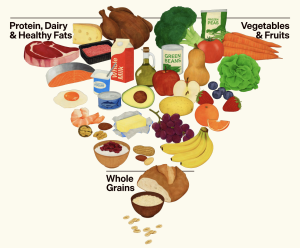
What follows is a balanced assessment—the good, the concerning, and the problematic— (the good, the bad, and the ugly) grounded in science and aligned with our shared commitment to advancing human and planetary health.
The Good: Areas of Partial Alignment with the Evidence
To their credit, the guidelines reaffirm several foundational principles that are well supported by the literatured:
· An emphasis on increasing intake of vegetables, fruits, and whole grains
· Strong recommendations to limit added sugars, refined grains, highly processed foods, and sugar-sweetened beverages
· Improved recommendations to reduce alcohol from from prior recommendations that normalized up to two drinks per day. Yet, the current research documents there is no safe level of alcohol consumption.
These elements are consistent with decades of nutrition science and represent an important step toward improving overall dietary quality at the population level.
The Concerning: Reductionism and Mixed Messaging
Despite these positives, several aspects of the guidelines raise legitimate concerns.
1. Misguided Protein Messaging
Public-facing statements emphasizing the need for “more protein” risk reinforcing unnecessary and unfounded dietary misconceptions. Contrary to public statements, protein has never been demonized in U.S. dietary guidance, and the reality is clear:
The majority of Americans already consume protein well above the amount required to sustain health and development and the more important consideration is how is your protein packaged.
The Recommended Dietary Allowance of 0.8 g/kg/day is readily met—and exceeded—by individuals consuming adequate calories from whole plant foods. Importantly, every whole plant food contains all essential amino acids, and dietary adequacy is not dependent on animal protein.
This is not a protein quantity issue, it is a protein quality and packaging issue, and the evidence is clear, protein packaged in plants reduces risk of all cause disease because it comes packaged with an array of micronutrients and fiber.
2. Saturated Fat Math Doesn’t Add Up
Reductionism leads to confusion and again the guidelines continue to recommend limiting saturated fat intake to less than 10% of total daily calories, a threshold that has not changed. Yet the simultaneous promotion of higher protein intake—implicitly steering consumers toward animal-based sources—creates an inherent contradiction that will lead to the overconsumption of animal products.
Simple “back-of-the-napkin” calculations show that routinely following these recommendations while emphasizing animal protein makes it exceedingly easy to exceed saturated fat limits, particularly for individuals consuming red meat, full-fat dairy, butter, or processed animal products.
The Ugly: Ignoring the Weight of the Evidence
1. Saturated Fat: Replacement Matters
The established scientific consensus—supported by extensive systematic reviews and large meta-analyses of both RCTs and prospective cohort studies—is clear:
While simply reducing saturated fat may not uniformly lower cardiovascular mortality, replacing saturated fat with unsaturated fats or whole-food carbohydrates significantly reduces cardiovascular disease risk. Replacing animal products with plants critically reduces the risk of the most common causes of disease, disability, and death.
This conclusion is foundational to guidance from major health organizations, including the American Heart Association, which bases its recommendations on robust evidence showing that saturated fat raises LDL cholesterol—a primary causal risk factor for atherosclerotic cardiovascular disease. Lifetime exposure to elevated LDL is associated with an increased risk of heart disease and Alzheimer’s.
Meta-analyses encompassing hundreds of thousands of participants consistently demonstrate reduced coronary events when saturated fats are replaced with polyunsaturated fats or whole grains—not animal protein or refined carbohydrates.
The guidelines are in opposition to WHO findings that processed meats are a class 1 carcinogen and red meat a class 2 carcinogen. Ignoring this important evidence is a critical mistake when advising populations
2. The Dose–Response of Plants Is Overlooked
One of the most consistent findings in nutrition science is the dose-response relationship of whole plant foods:
· Each additional serving of fruits, vegetables, legumes, and whole grains is associated with incremental reductions in cardiometabolic disease risk, cognitive decline, and improved measures of well-being and quality of life.
· Benefits are observed up to 8–10 servings per day
· Legumes—beans and lentils in particular—are repeatedly linked to longevity, reduced cardiovascular risk, improved metabolic health, and lower all-cause mortality
Yet these effects receive only passing acknowledgment, despite being among the most reproducible findings in nutrition research. Importantly, disease reversal and remission require intensive dietary intervention of whole, minimally processed dark colored plant foods and the elimination of processed foods, refined sugars, dairy and often all animal protein sources.
3. Fiber: The Real National Deficiency
The most profound nutritional deficiency in the United States today is not protein—it is fiber. Yet within the new dietary recommendations, protein is emphasized and there is a relative absence of critical guidance to increase fiber intake from whole plant foods.
· Currently, fewer than 4% of Americans, across all age groups, meet recommended fiber intakes of 25-38 grams per day for women and men with some research suggesting incremental benefits up to 70 grams per day
· Following the current guidelines as written will not correct this deficit
· Fiber intake in a dose response is tightly linked to gut health, metabolic regulation, immune function, and reduced risk of cardiovascular disease, cancer, dementia and type 2 diabetes.
Protein-centric messaging without a parallel emphasis on fiber-rich whole plant foods as the source of protein, risks further widening this gap.
4. Planetary Health: A Missed Opportunity
While the guidelines briefly acknowledge the role of diet in planetary health, they fail to address one of the most consequential data points in food systems science:
· Industrial animal agriculture uses approximately 83% of global farmland and this vast land use produces only ~37% of protein and ~18% of total calories.
· Recommendations to increase animal protein neglects the impact on strained global resources.
· According to EAT Lancet, and a growing body of literature, global diets will need to shift toward plant predominant nutrition for the preservation of global resources.
The current guidelines have profound implications beyond the individual plate for biodiversity loss, water use, soil degradation, animal welfare, and climate stability—issues that are inseparable from human health.
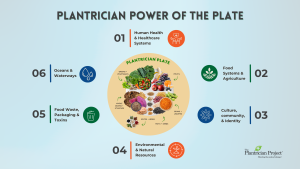
Everything is Connected
When we collectively choose a plate rich in whole plant foods—grown in partnership and harmony with nature rather than in opposition to it—we create healing that extends far beyond the individual.
From our DNA and mitochondria to our endothelium and microbiome, to our families, communities, healthcare systems, countries, ecosystems, and climate, the same regenerative principles and opportunities apply. Nourishing ourselves with a whole food plant powered plate becomes an act of stewardship—supporting disease prevention and reversal, restoring resilience, and helping regenerate the living systems that sustain life on this planet.
The science is not ambiguous. Our responsibility is to ensure that professional guidance reflects it—clearly, courageously, and without compromise.
Partnered in Hope,
Scott Stoll, MD, co-founder The Plantrician Project