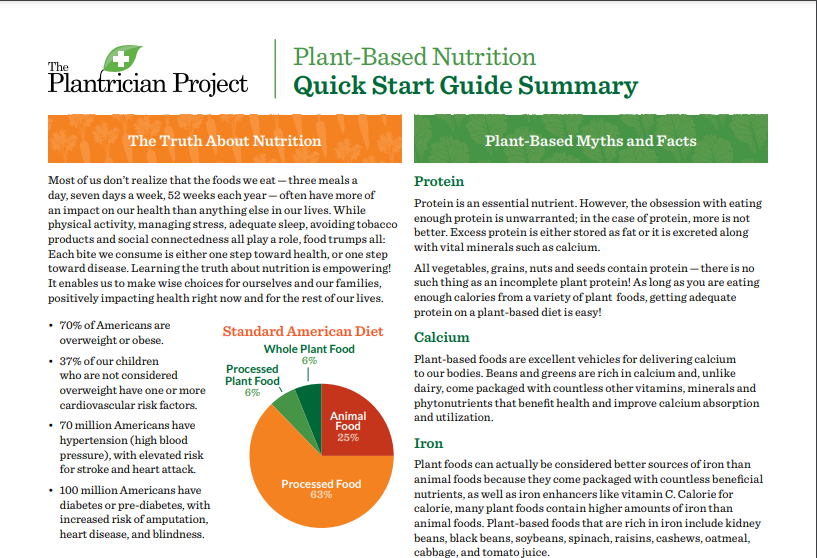

Most of us don’t realize that the foods we eat — three meals a day, seven days a week, 52 weeks each year — often have more of an impact on our health than anything else in our lives. While physical activity, managing stress, adequate sleep, avoiding tobacco products and social connectedness all play a role, food trumps all: Each bite we consume is either one step toward health, or one step toward disease. Learning the truth about nutrition is empowering! It enables us to make wise choices for ourselves and our families, positively impacting health right now and for the rest of our lives.
• 70% of Americans are overweight or obese.
• 37% of our children who are not considered overweight have one or more cardiovascular risk factors.
• 70 million Americans have hypertension (high blood pressure), with elevated risk for stroke and heart attack.
• 100 million Americans have diabetes or pre-diabetes, with increased risk of amputation, heart disease, and blindness.
What is a Whole Food, Plant-Based Diet? Foods and Nutrients to Increase Foods and Nutrients to Limit It’s a dietary lifestyle that maximizes the intake of whole, plant foods and minimizes the intake of processed and animal-derived foods. It’s a diet based on foods-as-grown: vegetables, fruits, whole grains, beans, chickpeas, split peas, lentils, mushrooms, herbs, spices and small amounts of seeds and nuts. Consumption of meat (including chicken and fish), dairy products, and eggs, as well as highly refined foods like bleached flour, refined sugar, and oil are minimized or eliminated.
PDF DOWNLOAD: QSG-Summary
To download the comprehensive Plant-Based Nutrition Quick Start Guide: https://plantricianproject.org/quickstartguide