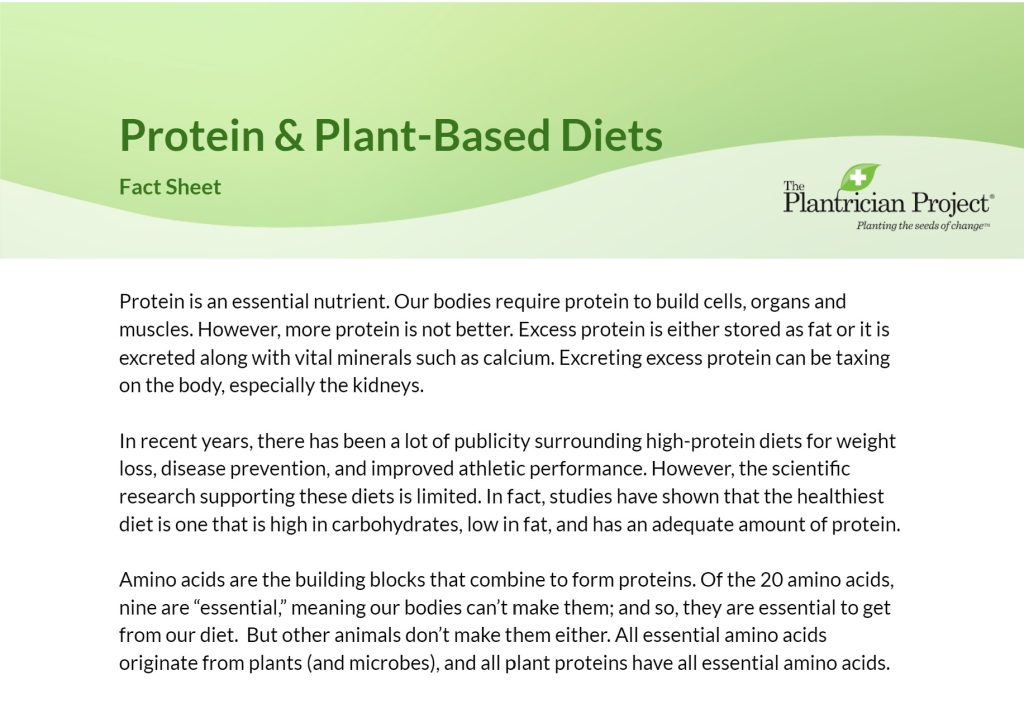
Protein is an essential nutrient. Our bodies require protein to build cells, organs and muscles. However, more protein is not better. Excess protein is either stored as fat or it is excreted along with vital minerals such as calcium. Excreting excess protein can be taxing on the body, especially the kidneys.
In recent years, there has been a lot of publicity surrounding high-protein diets for weight loss, disease prevention, and improved athletic performance. However, the scientific research supporting these diets is limited. In fact, studies have shown that the healthiest diet is one that is high in carbohydrates, low in fat, and has an adequate amount of protein.
Amino acids are the building blocks that combine to form proteins. Of the 20 amino acids, nine are “essential,” meaning our bodies can’t make them; and so, they are essential to get from our diet. But other animals don’t make them either. All essential amino acids originate from plants (and microbes), and all plant proteins have all essential amino acids.
It’s easy to get all the protein you need without eating meat, dairy, or eggs. As long as you are eating enough calories from a varied plant-based diet including beans, nuts, seeds, whole grains, and vegetables you can easily meet your daily protein needs, without the risks of animal products.