Menopause has a public relations problem. For generations it has been whispered about, joked around, and treated as something to quietly endure until it passes. But that framing misses the real story, and the real story is genuinely hopeful: this transition is not something that simply happens. A growing body of evidence shows that how you eat, move, sleep, and handle stress can meaningfully reshape how these years feel and how the decades after them unfold. Lifestyle medicine does not replace conversations about hormone therapy or other treatments, which remain important and personal decisions. What it does is hand you something women have been missing for far too long: real, evidence-backed agency over the second half.

A Transition, Not a Diagnosis
Menopause is technically a single day: the 12-month mark after a woman’s final menstrual period, typically arriving around age 51. Everything leading up to it, the stretch known as perimenopause, can last four to eight years and is where most of the action happens. Declining and fluctuating estrogen affects far more than the reproductive system. Estrogen receptors live in the brain, blood vessels, bone, skin, and metabolic tissue, which is why symptoms range from hot flashes and disrupted sleep to mood changes, joint aches, and shifts in how the body handles fat and blood sugar.
Here is the part that does not get enough airtime: the menopause transition coincides with measurable increases in cardiovascular risk, visceral fat accumulation, and bone loss. Cardiovascular disease, not breast cancer, is the leading cause of death in women after midlife. That reframing matters, because it tells us where to aim our energy. The years around menopause are not just something to survive. They are a window of opportunity to set the trajectory for the next several decades.
What the Evidence Supports
Food first.
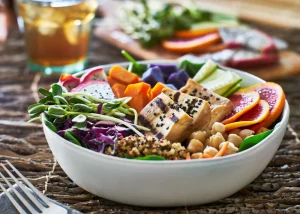
Observational and interventional studies consistently link dietary patterns rich in whole plant foods, including vegetables, fruits, legumes, whole grains, nuts, and seeds, with lower cardiovascular risk, healthier body composition, and better metabolic markers. For menopausal women specifically, research has examined two areas worth knowing about. First, soy foods: randomized trials suggest that whole soy foods such as tofu, tempeh, edamame, and soy milk may modestly reduce the frequency and severity of hot flashes for some women, likely through isoflavones that gut bacteria can metabolize into equol, a compound that interacts with estrogen receptors. Not every woman responds, but soy foods are nutritious regardless, so the downside is essentially nil. Second, fiber and a plant-predominant pattern help counter the insulin resistance and weight redistribution that tend to creep in during this stage. The WAVS trial (Women’s Study for the Alleviation of Vasomotor Symptoms), found that a low-fat vegan diet including a daily half-cup of cooked soybeans reduced moderate-to-severe hot flashes by 84% over 12 weeks, with roughly 60% of participants becoming free of moderate-to-severe hot flashes altogether. That is a striking result for a no-medication intervention, though it is worth noting the study was small, and even the North American Menopause Society’s leadership urged interpreting it with some caution. A larger second phase has since reported broadly similar findings.
Move with intention.
Exercise during the menopause transition is not about chasing a smaller number on the scale. It is about protecting the things estrogen used to protect for free. Resistance training is the headliner here: it preserves muscle mass and bone density, both of which decline more rapidly during this period. Weight-bearing and strength work reduce fracture risk and help maintain the metabolic rate that quietly drops with lost muscle. Aerobic activity supports cardiovascular and brain health, and the combination appears to ease mood symptoms and improve sleep quality. There is even reasonable evidence that regular exercisers report fewer or less bothersome vasomotor symptoms, though if you have ever had a hot flash mid-workout, you will be forgiven for some initial skepticism.
Protect sleep.

Sleep disruption is one of the most common and most underestimated menopausal complaints, and it is rarely “just” the night sweats. Poor sleep amplifies almost everything else, including mood volatility, appetite dysregulation, cognitive fog, and cardiovascular strain. Cognitive behavioral therapy for insomnia (CBT-I) has strong evidence in menopausal women and outperforms simply waiting for sleep to fix itself. Consistent sleep and wake times, a cool dark room, and limiting alcohol and late caffeine are unglamorous but genuinely effective.
Mind the stress.
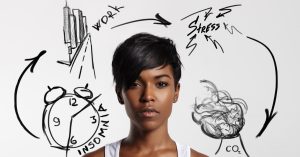
Cortisol and estrogen do not play nicely when one is rising and the other is falling. Chronic stress worsens sleep, drives visceral fat storage, and can intensify the perception of hot flashes. Mindfulness-based programs, breathing practices, and yoga have evidence for improving quality of life and mood during this transition, even if they do not switch off hot flashes entirely.
Two more worth a mention.
Alcohol deserves a closer look than the usual “everything in moderation” advice. Beyond being a recognized trigger for hot flashes and a contributor to disrupted sleep, it raises estrogen levels and is now firmly linked to breast cancer risk. The 2025 U.S. Surgeon General’s Advisory identified alcohol as a cause of at least seven cancers, including breast cancer, and the evidence increasingly points to no clearly “safe” level: even women who drink less than three times a week show higher breast cancer risk than those who do not drink at all, and a single daily drink raises post-menopausal breast cancer risk meaningfully. Cutting back helps, and some evidence suggests stopping altogether may lower risk further, particularly for hormone receptor-positive breast cancer, likely because it lowers circulating estrogen. The honest takeaway is not a guilt trip but a reframe: less is genuinely better, and zero is a legitimate and increasingly well-supported choice, especially for women already navigating the estrogen shifts of menopause. And tobacco not only worsens symptoms but is associated with earlier menopause, one more reason, if any were needed, to leave it behind.
Practical Takeaways
Build a plant-forward plate. Aim for half your plate as vegetables and fruit, with legumes and whole grains anchoring most meals. Think of it as crowding in, not cutting out.
Eat soy without overthinking it. One to two servings of whole soy foods daily, such as edamame, tofu, tempeh, or unsweetened soy milk, is a reasonable, evidence-aligned habit. It is food, not a supplement, and it is safe for the vast majority of women.
Lift something heavy twice a week. Two to three sessions of resistance training weekly protect muscle and bone. Start where you are; progress is the point, not perfection.
Add aerobic movement most days. Aim for around 150 minutes weekly of activity you will actually repeat. Walking counts.
Treat sleep as a priority, not a luxury. Keep consistent sleep and wake times, cool the bedroom, and curb alcohol and late caffeine. If insomnia persists, ask a clinician about CBT-I.
Practice one stress-lowering habit daily. Ten minutes of breathing, mindfulness, or yoga is enough to count.
Rethink alcohol, and know that zero is a sound choice. The evidence increasingly points to no clearly safe level for breast cancer risk, so less is genuinely better and none is a legitimate, well-supported option. If you drink, cutting back is a real improvement worth making.
Leave tobacco behind. Quitting improves symptoms and lowers long-term risk, and it is never too late for that to matter.
Track your numbers. Use this window to check blood pressure, lipids, blood glucose, and bone health with your clinician, and revisit them over time.
The Bigger Picture
Menopause has been framed for too long as a problem to be managed or, worse, endured in silence. The evidence tells a more empowering story. The same lifestyle behaviors that ease hot flashes and protect sleep also lower cardiovascular risk, preserve bone and muscle, and support cognitive and emotional health for decades to come. These choices work alongside, not instead of, whatever medical decisions a woman makes with her clinician.
This transition is not the beginning of decline. It is an invitation to invest in the second half with intention. The manual may still be short, but at least now we know it ends with something better than “good luck.”
References
Barnard ND, Kahleova H, Holtz DN, et al. The Women’s Study for the Alleviation of Vasomotor Symptoms (WAVS): a randomized, controlled trial of a plant-based diet and whole soybeans for postmenopausal women. Menopause. 2021;28(10):1150-1156. Published 2021 Jul 12. doi:10.1097/GME.0000000000001812
Barnard ND, Kahleova H, Holtz DN, et al. A dietary intervention for vasomotor symptoms of menopause: a randomized, controlled trial. Menopause. 2023;30(1):80-87. doi:10.1097/GME.0000000000002080
The North American Menopause Society. Menopause practice and management guidance on vasomotor symptoms, cardiovascular health, and bone health (current position statements). Available at: menopause.org.
American College of Lifestyle Medicine. Lifestyle medicine and women’s health across the menopause transition. Available at: lifestylemedicine.org.
U.S. Department of Health and Human Services. Physical Activity Guidelines for Americans, 2nd edition (resistance and aerobic activity recommendations).
This article is for educational purposes and does not constitute individual medical advice. Women navigating the menopause transition should partner with a qualified healthcare professional to make decisions suited to their personal health history.
About The Author
Jill Edwards, MS, DipACLM, has spent her career advancing health through lifestyle medicine, with a particular focus on education. She served for a decade at the T. Colin Campbell Center for Nutrition Studies, rising to Executive Director of Education and helping develop its globally recognized Plant-Based Nutrition Certificate with Cornell University. Today, at The Plantrician Project, she works to advance lifestyle medicine as a driver of better health, a more sustainable food system, and a healthier planet. Learn more about the team at plantricianproject.org/team.